The “Slammer” Problem
Brass instrument performers, notably trumpet players, can be introduced to large amounts of pressure in the head and eyes when playing their instruments. These stresses are often amplified when the posture is changed from a neutral setting, such as with marching band. Many novice to intermediate players experience intense pressure headaches, often called “Slammers” that can cause disorientation, extreme pain, blurry vision, and even blacking out.
Brass musicians who continually experience these pains are at risk of injury, and are far less likely to continue playing their instruments. Without a solution to reduce “Slammers”, many musicians will continue to endure extreme and disorienting pain when making music, and/or reach a breaking point.
Project Description
This project will create a device that aims to reduce certain stresses in brass players during performance: a flexible and compliant adapter between the mouthpiece and the shank of the instrument.
Marchy will allow the mouthpiece and the horn to sit at different angles; the player’s head and neck remains neutral, while the horn sits 10° above parallel, or wherever specified.
This innovation does not require any expensive or risky instrument modification whatsoever, just place between mouthpiece and shank, tune in for added length, go play!
Synopsis
Concept Art
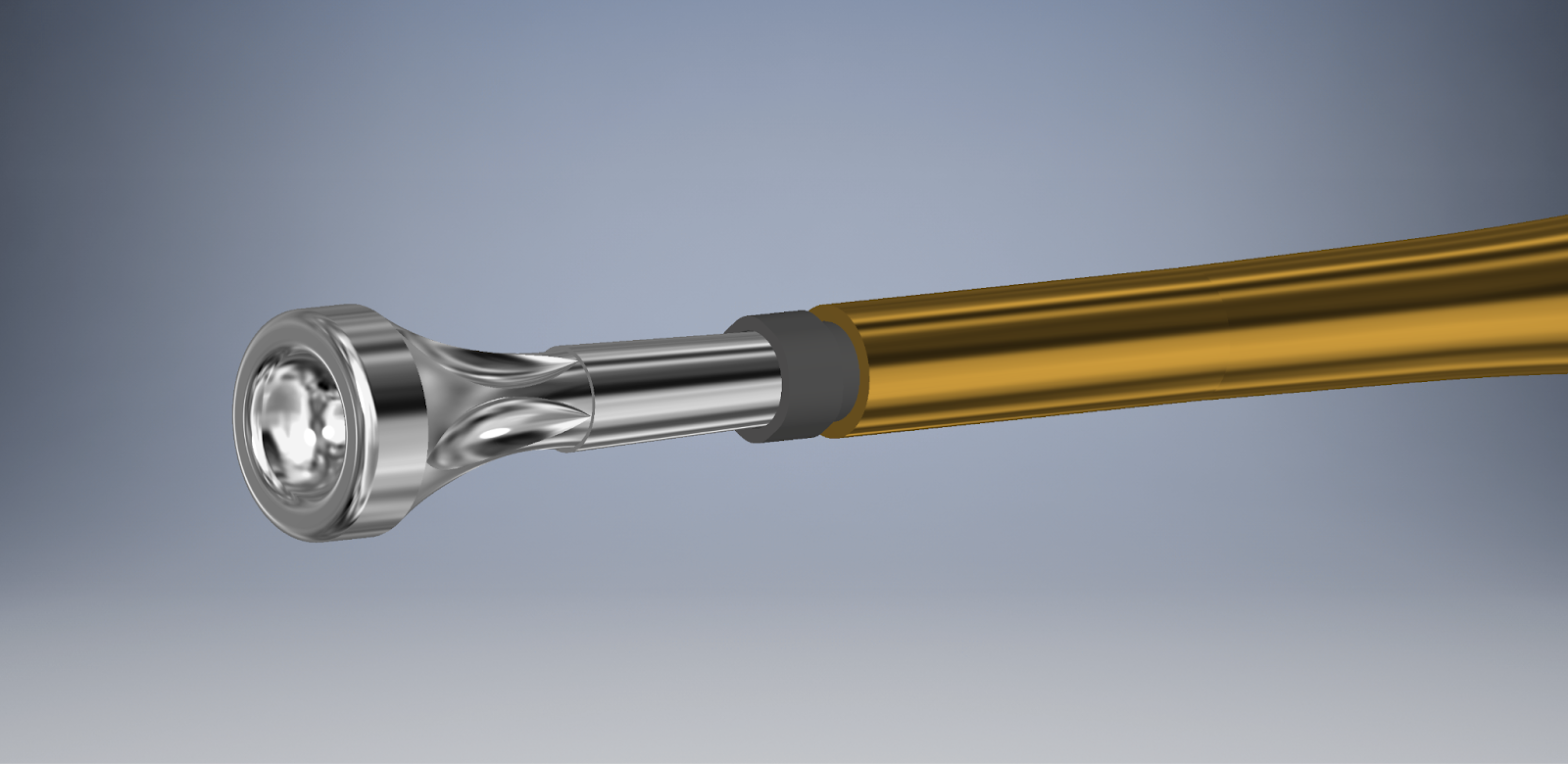
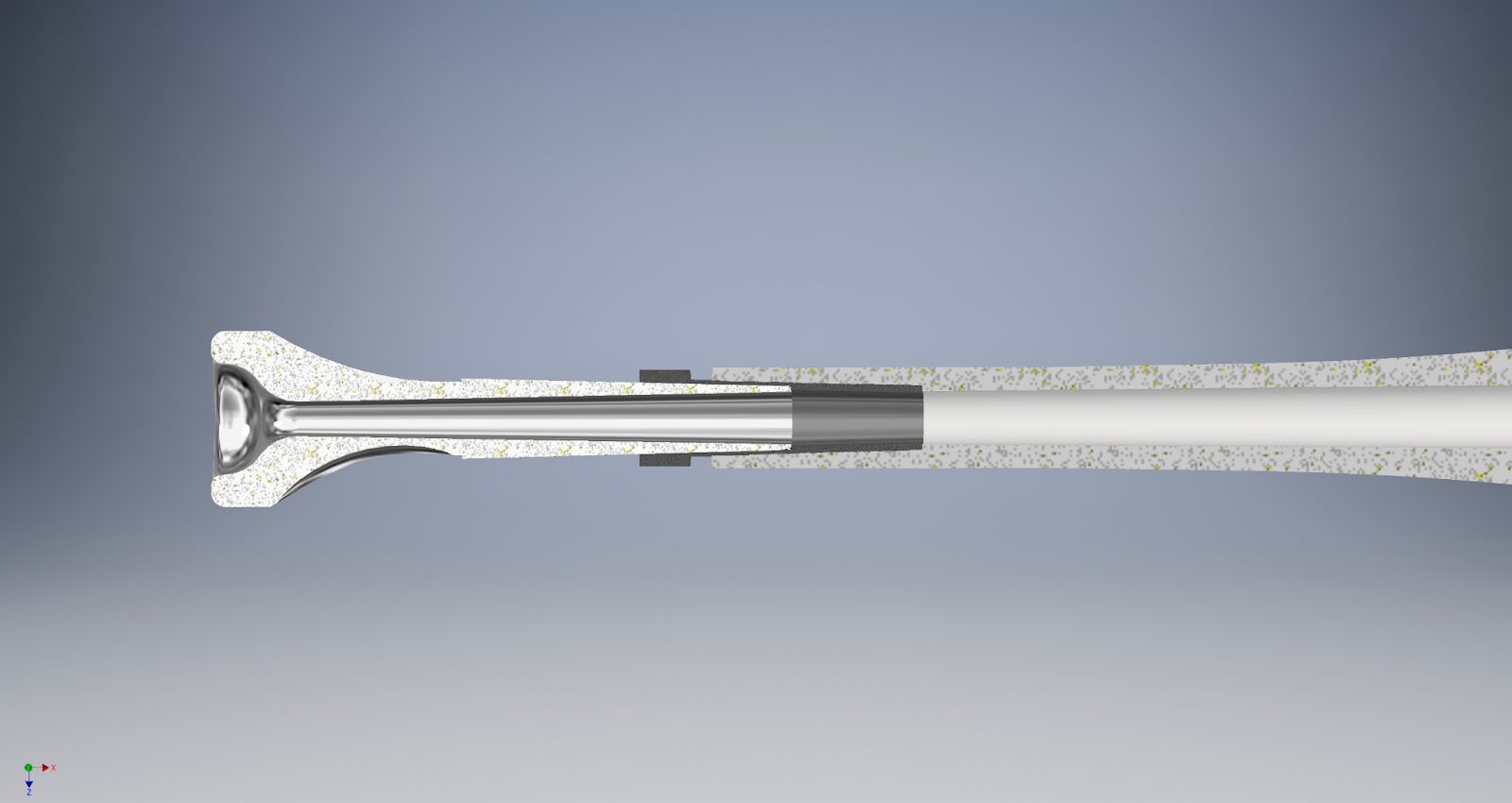
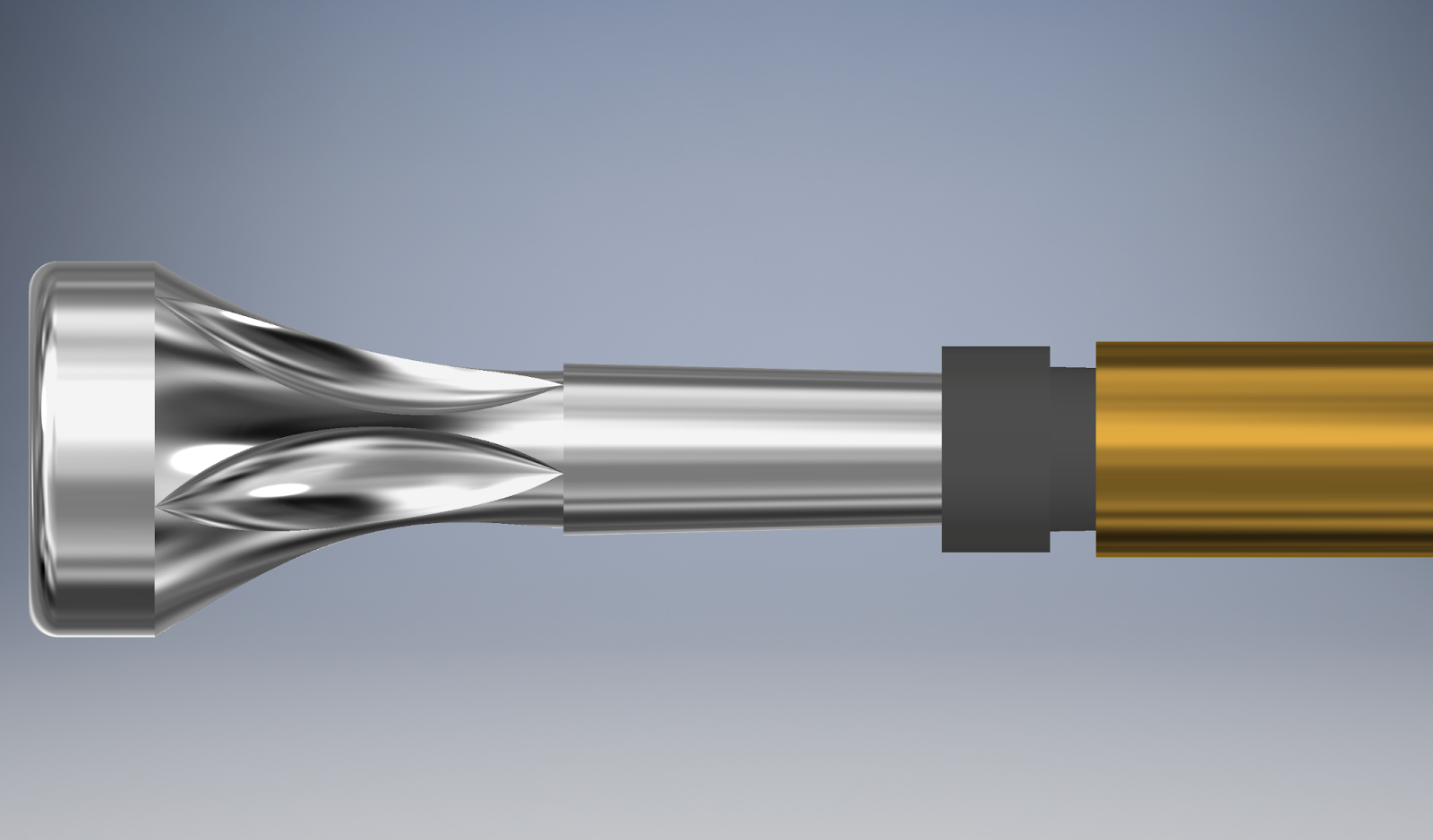
Renderings of Marchy (black) between a trumpet mouthpiece (silver) and trumpet leadpipe (gold). Renderings done in Autodesk Inventor
Proof of Concept

Industry and Skills
Technical Industries and Domains
Digital Fabrication
Digital Design/Modeling
Prototyping
Data Analysis
Music Performance
Fundamental Skills + Research
3D Design and Modeling (Autodesk Inventor)
Brass Instrument Performing Fundamentals (17 years as a trumpet player)
Sketching & Drafting (Legal)
No additional UAT courses required for MVP
Tooling and Supplies Necessary
FDM and SLA 3D Printing Equipment
Various Materials (filaments, resins, metals, rubbers, etc…)
Measuring Stress/Torture-Testing Equipment
Brass Players for Performance Testing
Target Markets
This product is intended for brass musicians as a whole, but more specifically for those in marching or jazz ensembles where posture can deviate from neutral and seated.
This is also aimed towards music educators, as it can be a solution for novice and developing players figuring out their playing positions, while minimizing pain.
In addition, this is marketed towards any brass musician that wishes to potentially decrease stress on the body, such as those with muscle deformities or Chiari, where a raised head can cause undue stress
Scope and Timeline
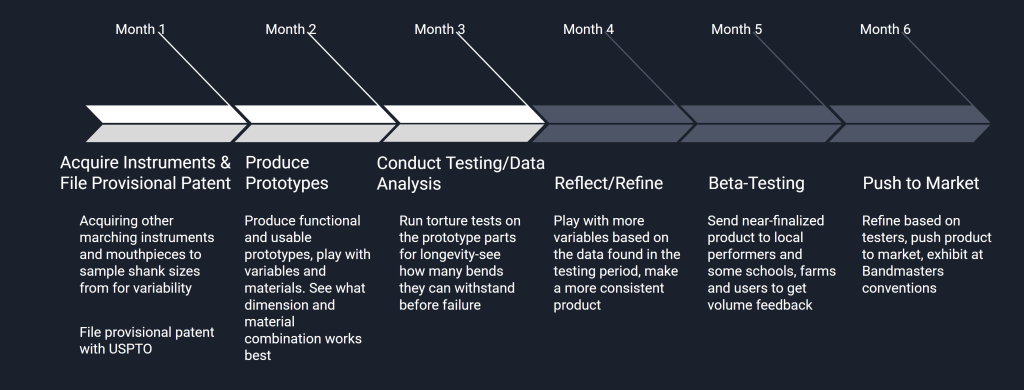
This project aims to create from prototypes, a marketable and functioning final patented product, get it in the hands of local performers and educators, receive feedback, and push the product to market, as part of an established business.
SIP Innovation Brief
Click Here!
FAQs/Concerns:
How will this affect the sound?
Marchy will have a small but measurable impact on the tone quality of the instrument, as it introduces a soft joint in between the mouthpiece and the leadpipe; where the majority of an instrument’s tonality comes from. This impact, however, will seldom be noticeable in an environment where power, projection, and consistently loud dynamics are necessary, such as marching band or pep band.
Why not make it out of brass?
Brass is a very workable and pliable metal, but it has very low fatigue resistance and relatively low strength. Similar to unfolding a paperclip, brass can bend once or twice, but bend it more than that, and it will break apart. The purpose of a compliant joint is to be able to withstand thousands of bends, something brass is unable to do. Despite the instruments and mouthpieces being made of brass, they are quite fragile, and require servicing to maintain functionality.
Will this work for all brass instruments?
Marchy will come in a variety of sizes to fit the following instruments: trumpet, cornet, flugelhorn, mellophone, mellophone w/horn mouthpiece, small-shank trombone/baritone, large-shank trombone/euphonium, and tuba/contrabass.
 JP Woods and Prints